A Review of The Decemberists' The Crane Wife 17 years, 5 months ago by Martey Dodoo
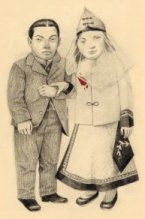
I have been listening to The Decemberists' latest album, The Crane Wife for a while now. Whenever I get new Decemberists music, I imagine writing the ridiculously long and detailed review that their lyrically complex music deserves. Reality always compresses my writing, but I think that my review of their previous LP, Picaresque was pretty good, despite my misgivings about my rushed writing at the time. Partially in homage to it, I have written this review in track-by-track format as well. Like the previous review, I have written more about the songs I am the most appreciative of at the current time.
There are three parts to the title track of this album, yet The Crane Wife 3 is the first to appear on the tracklisting. Why? Because The Decemberists are strange. This song is an okay start, but nothing particularly impressive.
The second track on the album The Island is progressive, composed of three parts, all referencing The Tempest. The first, "Come and See," is pretty good. The second, "The Landlord's Daughter," has standard Decemberists lyrics, but is a bit too strident for me. The third part, "You'll Not Feel the Drowning," on the other hand, is pure musical gold. It is one of the most beautiful songs about death that I have ever heard.
Forget you once had sweethearts
They've forgotten you
Think you not on parents
They've forgotten too
Few songs so adequately portray the oblivion and freedom (directly referred to by Carson Ellis' illustrations of two Mercury dimes) of death. This song has made it onto the list of music I would like to be played at my funeral.[1]
Perhaps it is the fact that I have been listening to lots of Iron & Wine, but I do not find the Civil War song Yankee Bayonet (I Will Be Home Then) that compelling. Perhaps if I was a huge fan of Laura Veirs (guest vocals) or something.
O Valencia! is the first single, so it is really poppy. It is decent, but nothing special. Luckily, the next track, The Perfect Crime #2 begins a series of good songs. I can only wonder what became of The Perfect Crime #1.
When the War Came is one of the stronger songs on the album. Based on Elise Blackwell's novel Hunger, a story about biologists in World War II Leningrad. I am not sure whether it is my Russophilia[2] or the veiled references to the war in Iraq, but I like it.
In another song with direct historical references, Shankill Butchers tells the tale of a Protestant gang in 1970s Northern Ireland who murdered numerous Catholics in grisly, violent ways. The melody and theme would be at home on any of the Decemberists' albums.
Continuing the goodness, Summersong makes me long for July. Ironically, this song was a free download from Pitchfork back in August. At the time, I was unimpressed, but then summer was not as nebulous as it is now that the nights are cold and dark.
Or, to paraphrase from The Decemberists in The Crane Wife 1 & 2, "And the winter's so / The winter's so long." Unfortunately, this two-part song is too long as well. It would have been cooler for The Decemberists to separate the various parts of The Crane Wife throughout the album, rather than using them as bookends.
But there is still one trick up the band's sleeves. The album ends with Sons & Daughters, which is the best ending track since "California One / Youth and Beauty Brigade" on Castaways & Cutouts.
Further Reading
- October 30 Pitchfork Interview
- After the Bombs - the bonus track you get if you purchase the album through iTunes.
Footnotes
[1] Some other songs on this list: Mozart's Masonic Funeral Music, Neutral Milk Hotel's In the Aeroplane Over the Sea, Part 3 of The Decemberists' The Tain.
[2] Or maybe it is just that the Eastern Front in World War II was so horrible. The Wikipedia page of Tanya Savicheva has been in my Firefox bookmarks since July 2005 because I felt it was too sad to forget.